
· 2 min read
A note on AI and music.
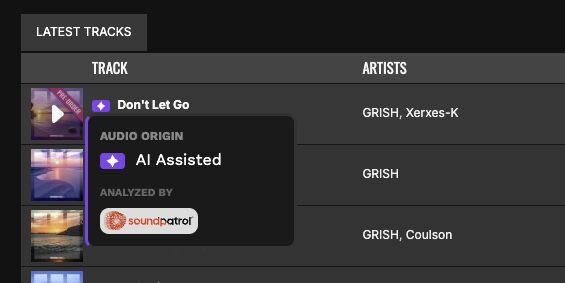
The first email I read was from my label, asking why two of my tracks were flagged as AI on Traxsource.
Most of you know me from Adobe. Nineteen years, events team, keynote demos, generative AI activations. What shows up less on this feed is the other half of my life: I produce and DJ progressive and melodic house under the name Grish. Releases out, played out, the whole thing. It's not a side hustle I mention at parties, it's a second body of work.
I don't use AI to write music. No generated melodies, no generated arrangements, no generated drums, no generated vocals. I make these records on hardware, in my studio, slowly, and a human engineer mixes and masters them. That's the part I actually enjoy. Twisting knobs, dialing in a reverb until it sits right, building a synth preset from scratch, sitting with a vocalist and finding the take. Why would I automate the part I do this for?
I ran both tracks through SH Labs, one of the detection APIs Traxsource uses, and both came back as human made. The tag on my tracks names SoundPatrol as the source. So Traxsource uses two detectors and they don't agree with each other. One of them tagged my tracks, and now I'm the one assembling evidence to prove I made my own record.
That SoundPatrol name matters, because they are the ones gaining the most ground right now, with Universal and Sony both signed on.
To be clear about where I do use AI: artwork, promo images, photo cleanup, code. Given the day job, I'd be a hypocrite to pretend otherwise. But there's a difference between a tool that speeds up the work and a tool that does the work. In all of that, I'm still the one making the decisions.
Here's the part that concerns me beyond my own two releases. I've seen it suggested that highly repetitive arrangements have a higher chance of getting flagged. Repetition is not a symptom of machine generation in electronic music. It's the genre. A 32 bar loop that builds is the entire point.
To be fair, Traxsource did respond within 2 hours of me raising the issue and there is a real process, albeit a bit broken. I can't dispute this myself. They only accepts disputes from verified rights holders through their label system, so I now have to ask my label to ask their distributor to file on my behalf. I'm the only person in that chain who has the project files, and I'm the one person who can't submit them.
I welcome the transparency about AI in music. I want listeners to know what they're buying. But the methods used to flag it have to be rock solid, because a false positive costs an artist placement, income, and credibility they then have to win back.
Get the detection right, and I'm all for it.